Season 1 · A Documentary in 10 Reasons
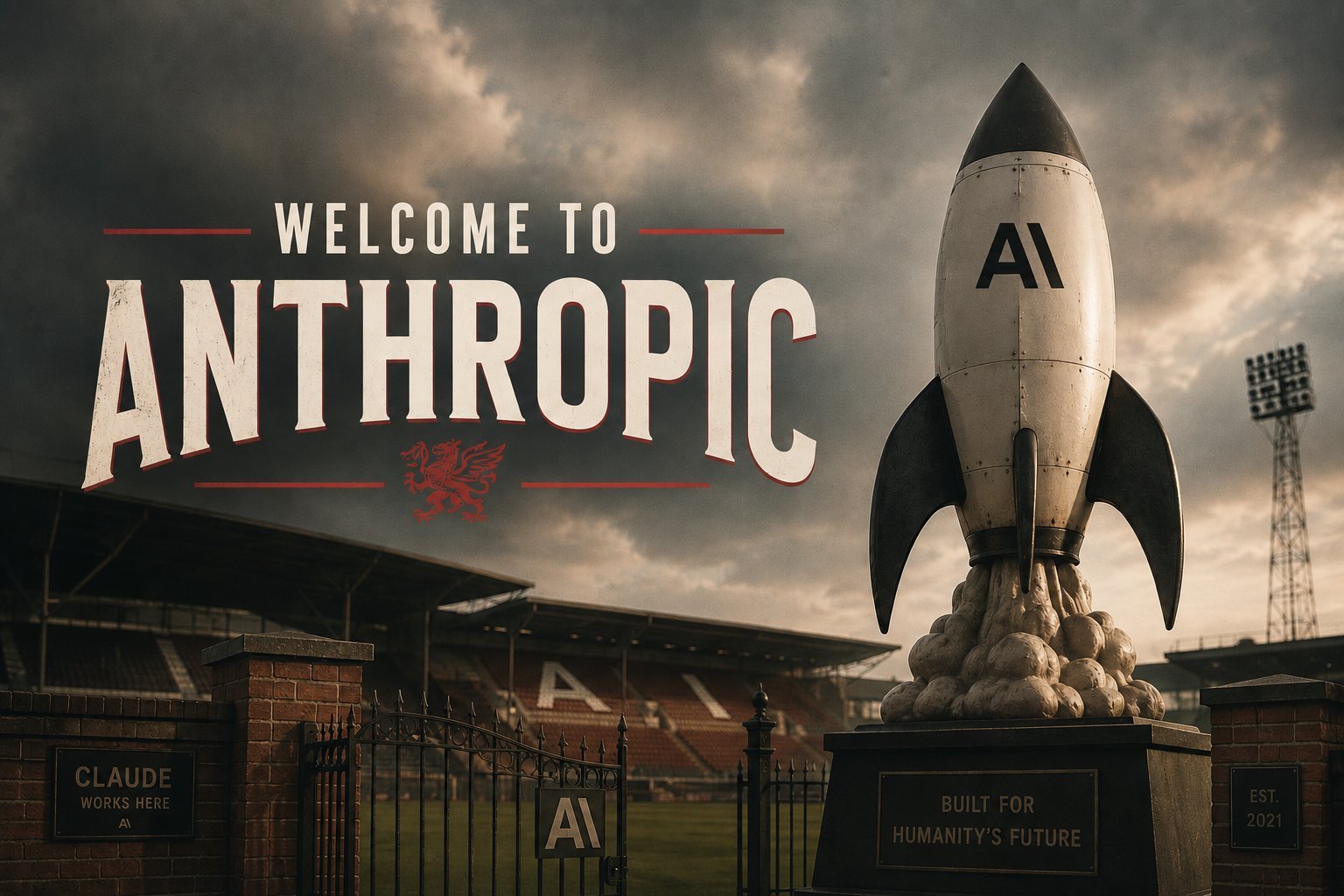
Welcome to
Two brilliant scientists. A multi-billion dollar rocket ship. One small problem: someone has to explain to the world why any of this matters — with real craft, real range, and a real point of view. This is the story of why that someone is Tess Clark.
The Premise
10Reasons. One role.
No overtime required.
Ryan Reynolds and Rob McElhenney bought a football club they'd never heard of in a town they'd never visited — and then had to figure out, very publicly, how to run it. They created "Welcome to Wrexham," an Emmy Award-winning docuseries that is actually a case study in how great storytelling, brilliant marketing, and genuine community investment can transform a struggling town that desperately needed it. The stakes turned out to be enormous.
Dario Amodei and Daniela Amodei built one of the most consequential AI companies on the planet. Now they need someone who can translate what that actually means for the enterprises betting their futures on it. Not a typical tech hire. Someone with thirty years of storytelling across every medium humans have invented.
A seasoned screenwriter. A television advertising veteran. A startup brand builder who has taken companies from zero to acquisition. A woman who has sold stories to major studios and sold ideas to Fortune 500 boardrooms, often in the same career week. Welcome to Anthropic.
In ascending order of obviousness, starting with the one you'll feel in your bones.
Welcome to Wrexham isn't about football. It's about a town that needed to believe in itself again. She knows this instinctively, because she's spent three decades working in TV, film, documentaries, plays, podcasts, books, and short stories, always asking the same question: what is this really about? The best enterprise copy isn't about software features. It's about the CFO who finally got her board to stop being afraid of AI, the ops team that reclaimed their Friday afternoons, the CTO who stopped losing sleep. A CalArts-trained screenwriter knows how to find that story before a word is written. And a television advertising veteran knows how to tell it in thirty seconds flat.
TV. Film. Documentaries. Plays. Print. Books. Podcasts. Short stories. Tech. Each of these is a completely different voice system: different rhythms, different registers, different contracts with the audience. She has built fluency in all of them. And in the startup world, she has done the harder thing: codified that fluency into voice and tone guides that teams could actually use, documents that didn't just describe how a brand sounded, but gave writers the judgment to make the right call in any situation the guide didn't anticipate. When Anthropic needs its enterprise voice to stretch across a campaign headline, a solutions page, a whitepaper, and a paid social line without losing the thread, she knows how to hold that thread, because she has spent years teaching others to hold it, too. The Head of Copy won't just gain a writer. They'll gain someone who has thought harder about voice as a system than almost anyone they'll interview.
A Bachelor of Fine Arts in screenwriting from CalArts is not a writing degree. It's a thinking degree, a rigorous education in structure, character, stakes, and the architecture of narrative under pressure. She has sold screenplays and story outlines to major studios and production companies. She knows what it means to pitch an idea to a room full of people with opinions and money, defend it, refine it, and land it. That exact skill: concepting an idea, representing it with confidence, making the room believe in it, that's what this role calls "executive presence." She's been doing it since before most of her future colleagues had their first internship.
Her television advertising career is long, sustaining, and genuinely wide. Automotive. Health. Beauty. Sports and fitness. Travel. Home. Major enterprise clients, each with their own audience, their own technical complexity, their own version of "what we need the viewer to feel by the end of thirty seconds." But that's only half the range. She has also gone deep in tech, writing for an open source commerce platform serving enterprise retailers and brands, and a startup working at the intersection of AI and the future of work, scaling one from early-stage through to venture backing and successful acquisition. She has written the blog posts that built the audience, the pitch decks that closed the rounds, and the brand voice guides that held everything together when the team tripled overnight. She knows what it means to build an enterprise story from scratch, because she's done it, in the most unforgiving environment there is.
Selling a screenplay to a major studio or production company is one of the most unforgiving conceptual exercises in any creative field. The idea has to work before a single word is written. It has to survive a room of skeptics with money, egos, and competing agendas. It has to be clear, specific, and emotionally true — all at once, on your feet. She has done this, and she has sold. That's the muscle this role needs when it asks for someone who can "take a brief and come back with an idea, not just a draft." She doesn't pitch copy. She pitches concepts that copy lives inside.
In television advertising, the writer who can only perform in the room is a liability. The writer who can only go deep in the research never gets in the room. She does both. In the startup world, she went further still: crafting voice and tone guides that gave fast-growing teams a shared language before they had a brand team, writing the pitch decks that made investors lean forward, producing podcasts that built audiences before the product was ready, and creating the blog posts and social content that turned early users into believers. That combination — research, strategy, system-building, and then rolling up her sleeves and writing the actual thing — is exactly what this role describes as "leader-doer." Reynolds didn't just write checks. She doesn't just write briefs.
Television. Film. Advertising. Every one of these is a collaborative art form where the writer who doesn't understand what the image is doing gets their words cut. She has spent years writing alongside directors, cinematographers, designers, and art directors — learning viscerally how a line lands differently when the visual shifts, how silence can carry more than the sentence that was scripted, how the best creative partnerships produce something neither person could make alone. The Art Director, Enterprise will have a collaborator who instinctively writes for the space the visuals leave open, not the space they fill.
World travel isn't a hobby. It's a training program in audience intelligence — learning to read a room where you don't know the conventions, adjusting your register without losing your authenticity, understanding that what moves people in one context can fall completely flat in another. She brings that fluency to enterprise audiences. She has written for automotive buyers and wellness consumers, fitness enthusiasts and homeowners, travelers and patients, and she knows what changes when the audience changes and what must stay fixed. The CTO and the CFO read differently. The developer and the VP of Operations need different things from the same product. She navigates that without a map, because she's been navigating unfamiliar terrain her whole career.
She is an intuitive healer and a mindful meditator. She is not a typical tech worker, and she will tell you so directly, because it's precisely the point. She believes that AI is the most significant technological shift of our generation — on the scale of industrialization, with stakes just as high and human costs just as real. And she believes, with equal conviction, that the companies building and deploying AI need voices that carry humanness and authenticity into every piece of copy, or they risk writing the future in a language no one actually lives in. Anthropic's mission is safety and benefit. Her instinct is the same, just expressed in the medium of words, campaigns, and the stories enterprises tell about why any of this matters.
Screenplays sold. Campaigns run. Boards pitched. Worlds traveled. An intuitive healer. A mindful meditator. A woman who has written across every medium humans have used to tell each other the truth. Anthropic doesn't need another person who learned to write at a SaaS company. It needs someone who brings a lifetime of authentic human experience to a technology that desperately needs humanness — someone who can write the enterprise story without forgetting the humans that enterprise story is supposed to serve. She is not the obvious hire. She is the right one. And in thirty years, when people look back at how the AI story was told, her fingerprints will be on the version that actually mattered.
Tess Clark.
Copy Lead, Enterprise — Candidate
Contact Tess Clark →